Monday, June 1, 2015

Ongoing Lessons in Entrepreneurship

Test-market before committing full resources to a new product line.
Or, what I wish I had known from the start.

  • Write your business plan, apply the rule of threes, then add a little more.

There are many, but my rule of threes states that your plan will take 3 times as long, cost 3 times as much, and revenues will be 1/3 of projections. This is especially true if you are trying to start a business while employed full-time elsewhere. You must sleep, after all, and there is a limit to the energy you can expend and maintain your money-making job.


  • Small risk means small gain.

There's an old joke about the difference between an artist and a serious artist: a mortgage. It's true. Nothing lights a fire under you like "betting the farm," but, in the current financial climate, that seems too dangerous for someone as risk-averse as I am. So, I'm starting small and growing slowly. I'm still working my "day job" for the "steady" income.

  • My customers are my "bosses."

One of the advertised benefits of entrepreneurship is that you can "be your own boss." This is, in a large sense, utter hogwash. If you're selling something--goods or services--your customers are your bosses and control you with their buying behaviors. Learn all you can about the identity and habits of your customer base and you'll make far fewer missteps.

  • If you can afford the note, you can afford to save up for it.

I have a real problem with this. I am, admittedly, debt-averse--a stance developed through some hard lessons. Unless it is essential, avoid paying interest to anybody. Interest is money you pay to someone else because you were not disciplined enough to save in advance.


  •  Develop your marketing channels before you fully commit to production.

I know, I know: you can't sell something you haven't made. Actually, you can; swindlers do it all the time. The problem is: how can you ethically sell something you haven't made? Okay, make a few and see how they go over. See if there is any demand for your product. If there isn't, can you create a perceived need or value? If you're making something nobody is buying, you do not have a business: you have a hobby.
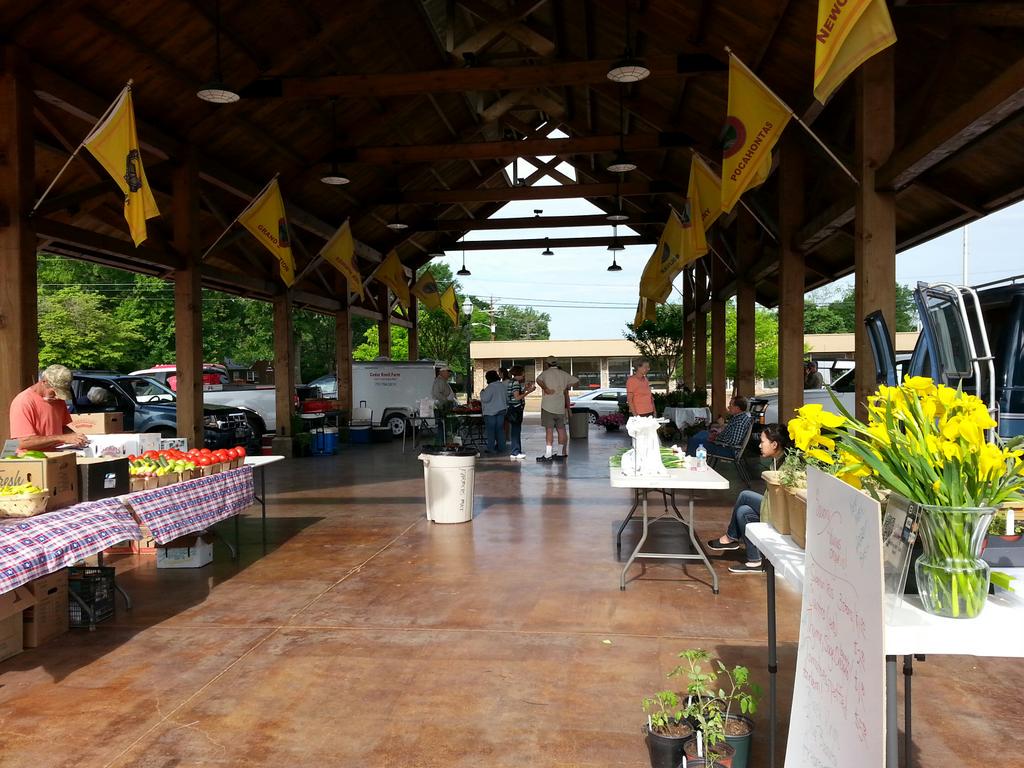
Remember that you're selling to people!

  • "I'm going to sell it on the Internet" is not a marketing plan.
Perhaps it's just what I sell, or that I'm totally inept at Etsy/whatever, but Internet marketing just doesn't work for me (and I have a college degree in Geek). My husband is a jewelry artist and has sold, maybe, 5 pieces on our Etsy store (yes, our pictures are awful). That conversion rate is infinitesimal. He also sells at art fairs and crafts fairs where our conversion rate is about 25%. If you walk into our booth, there's a 1-in-4 chance you'll buy something. Part of that gorgeous booth design, but a big part is experienced inside-sales staff who know the questions to ask to make recommendations for the customer. My point is, Internet sales are all the rage, but our bread-and-butter is grassroots face-to-face retail.

  • Control costs.
Cost control is the difference between success and failure. In your personal life, each dollar you spend costs you at least $1.25 to make. If you follow that trend in your business, you'll soon be out of business. Margin is the difference between what it costs to make your product and what your customers pay for your product. The bigger the margin, the more you can pocket or reinvest in your business. While you're minimizing costs, always be on the lookout for value. Make sure that you're not degrading your product quality in the name of cost control.

  • Know when to say when.


If you're not making money, and you've given your business adequate time to develop, and you're not having fun, and you can quit without losing the farm, stop. Do something else. Do nothing else. Take a break before your next big idea. Give it your all, but, when your all isn't enough, stop.


  • So, you're going to see me on next month's cover of Entrepreneur magazine, right?
Um, no. I'm not trying to sell you a subscription or some high-priced webinar. I'm not scamming investors; I'm not taking out big loans; I'm not courting venture capitalists. I'm a small-potatoes micropreneur sharing the lessons she's still learning on her way to building a successful retirement business. I hope you can learn from my mistakes, and build your own successful business!

What lessons have you learned? Share them in the comments below!

Nancy

Sunday, April 19, 2015

2015 Plants for Sale

Our mobile visitors cannot see the product list, so, here 'tis!

2015 Organic, non-GMO Transplants


Find us at the Fayette County Farmer's Market beginning March 28


Early Vegetables: Transplants expected to be ready March 28


Broccoli: Waltham 29: Tolerates cold well, but may “button” at colder temperatures.

Broccoli: Early Purple Sprouting: Tolerates cold well, may “button” at colder temperatures.

Broccoli: Calabrese Sprouting: new variety; Likes somewhat warmer temperatures.

Broccoli: Umpquah: Likes somewhat warmer temperatures.

Cabbage: Early Flat Dutch: new variety; reported to be good for kraut!

Tomatoes: Transplants expected to be ready after April 22


Note: All standard tomato varieties are indeterminate and should be staked or trellised.

Table 


Ozark Pink: survived a tomato hornworm invasion, produced throughout the season; good flavor.

Arkansas Traveler: survived hornworm onslaught, produced late into the season, good flavor; Arkansas name connection.

Cherokee Purple: survived hornworm invasion, good producer, excellent flavor.

Black Trifele: survived hornworm onslaught; flavor-wise, probably my favorite because of its mild and smoky flavor; much smaller than a pear for me, with a few cracks. Not a prolific producer, but worth the trouble.

Black Krim: survived hornworm onslaught; name recognition; good flavor.

Arkansas Marvel: new variety: catalog description: "4-inch, 1 lb., meaty, yellow-orange beefsteak tomatoes with red marbling with a gush of wonderful sweet, well-balanced tomato flavors”

Homestead 24: new variety: catalog description: "smooth, red, round 8 oz. fruits with exceptionally good taste"

Canning/Paste 


Early Annie: short plant with few seeds, good flavor, actually produced all season for me.

San Marzano Gigante: the legendary flavor and twice the size!; good flavor, and excellent producer; prolific nearly until

frost; recognizable name; I'm actually planting San Marzano Redorta this year, but looking forward to a good harvest

Currant 


Hawaiian Currant: Bracts of red, tiny, sweet, tasty tomatoes

Gold Rush Currant: Heavy producer of bracts of tiny orange tomatoes, great flavor

Peppers: Transplants expected to be ready after May 15


Chinese Five-Color: hot; new variety; beautiful edible ornamental whose fruit ranges through green, white, orange, and red; reported Scoville 50,000

Tam Jalapeno: hot; good producer, nice-sized fruit; reported Scoville 4,500

Jupiter: sweet; new variety; thick-walled, disease-resistant bell

Ozark Giant: sweet; good producer, medium size bells, produced until frost last year

Email: savory@liveasavorylife.com

www.liveasavorylife.com

Saturday, October 11, 2014

Red Sky at Morning in Absaroka County

Is the sun setting on Longmire as we know it?
One of the promises I made to myself over the summer is that I would stop wasting time on idle television viewing so I could enjoy my favorite shows.  This has, actually, worked pretty well, and has freed up a tremendous amount of time I did not realize I was wasting.  One natural consequence, of course, is that I became very interested in those few shows with the inevitable outcome:  one was cancelled.  As a reader, I am a great fan of the cozy novel, and Longmire certainly qualifies as a cozy novel and cozy television.  Yes, I do tweet my support under the #LongLiveLongmire hashtag, but, as a viewer who also writes, I have some reservations about season four.  I don't know about you, but, despite some excellent performances, the plot had become a bit claustrophobic.  I'm ready to meet some more of the fine (and wicked) folk of Absaroka county.  As for the core cast, there are some issues that need to be addressed:

Branch Connally (Bailey Chase) is done as a deputy, even if he survives his duel with his father.  Although he doesn't appear in the novels, I have enjoyed the character as a foil for Walt's traditionalism.  He may be the only character on the show (with the possible exception of Ferg) who admires Walt while seeing his human frailty.  I'd love to see how the character rebuilds his life, but, given all the activity on Bailey Chase's IMDB Filmography, I'm not holding out much hope.

Barlow Connally (Gerald McRaney) has been counting coup on Walt Longmire for many years and, as much as I enjoy watching McRaney chew up the scenery, I like the symmetry of Walt and Branch killing each other's "White Warrior."  Barlow was a big character whose death could reverberate through the plotlines for a while.

Jacob Nighthorse (A Martinez) is a mystery to me, and I'd like to know more.  Just how shady is he?

Malachi Strand (Graham Greene) is almost a stereotype "big bad" and seems too obvious for this series unless there's a lot we don't know.  Still, any Greene screen time is fun.

Matthias (Zahn McLarnon) is another mystery.  Is he just a younger Malachi, or is there more to him?

Ruby (Louanne Stephens) is the best "office mom" ever, but, just once, I'd like to see her chew on Walter.

Ferg (Adam Bartley) is getting a promotion this year whatever happens.  He'll no longer be the "kid" and the character has a long way to go before anyone will take him seriously as a deputy.  Could be fun to watch.

Cady Longmire (Cassidy Freeman) has grown up some, but the aftermath of season three could be even more challenging.  I'm a die-hard Branch/Cady shipper and would really enjoy watching them work out a future together, even with all the roadblocks season three threw in their way.  Without Branch?  Oh, please don't pair her off with the lawyer friend; Cady needs a cowboy to keep in line.

Henry Standing Bear (Lou Diamond Phillips) gets a pass this year because he was the damsel in distress and he played it well.  Actually, he's the only one of the major characters, except Branch, who stayed true to his principles.  More Henry, please.  And let's find out what he plans to do with the jar!

Vic Moretti (Katee Sackhoff) has been the most disappointing character this season, between mooning over Walt and hiding out in his office to be safe from Branch??????  Please.  Where's the tough Philly beat cop we thought we knew and loved?  The whole stalker plotline unraveled for me the minute I found out she'd slept with a married man.  Now, not even divorced, she's mooning over Walt, who happens to be her boss.  Next she'll be complaining that the citizens of Absaroka don't respect female cops.  Small towns have long memories.

Walt Longmire (Robert Taylor) has reverted back to pre-season one, without the Rainier beer.  He has been so focused on the Martha/Henry case that he's neglected a major investigation (David Ridges case), neglected a subordinate spiralling out of control (Branch), and, oh, aided and abetted a fugitive while robbing a grave.  So much for nobility and honor.  Walt is deeply flawed, deeply human, and deeply decent; that's why we love him.  But he, and the show, desperately need someone to remind him that he isn't a saint.  With Branch gone, and Vic in love, I wonder who that might be.

So, even if it finds a new network, changes are in store for the fans of Longmire.  I hope we get to see them!

#LongLiveLongmire

Nancy 


Thursday, September 11, 2014

On $30 Paint Jobs, and Other of Life's Priorities


Before . . .
I've written several times about my little truck which, honestly, looks like it has leprosy.  It's does, after a fashion, since, because it is cursed with one of those infamous GMC primer coats that NOTHING sticks to, its paint peels like it's a redhead with a sunburn.  The dealer painted it several times in its youth (it's 25 years old this year!), and nothing stuck until my aunt and uncle, from whom I inherited it, painted it with tractor paint.  That's been at least 15 years ago and that paint is turning loose, too.  The truck is primarily used on the farm, is 25 years old but runs well, needs some body work, and, to be perfectly honest, is probably not worth the cost of a professional paint job.  My Suburban is afflicted with the same GMC paint disease, is only 20 years old but runs extremely well considering it has 300,000+ miles on it (we're going for half a million!), and would take more paint than my house.

Now I'm not one to sweat appearances over function, but even I began to tire of the piteous looks from friend and stranger alike so I started casting about for a solution.  Professional paint jobs?  Too expensive--even the cheap ones.  And the idea that formed sounded the the beginning to a Jeff Foxworthy joke:

If your car's new paint job involves blue tape, spray cans, and day with calm winds . . .

Before . . .
You get the idea.  Yup, I did it.  I started with the Suburban and a trip to Home Depot for Rust-Oleum Automotive Enamel in Gloss White.  I taped off everything I didn't want painted and shot the little rust dings with a bit of gray primer.  Given that the roof of a Suburban is only slightly smaller than an aircraft carrier, I dragged out a 6 foot step ladder for it and the hood.  Finding a calm day can be a challenge, but one turned up in late July, and I spent an afternoon and six cans of gloss white.  Actually, I'm pretty impressed with the results, so far.  It looks far better from a distance, and not so bad up close.

. . . After
The procedure was the same for the truck:  sand off big flakes, prime rust spots, tape off glass, and wait for a calm day.  For this project, I invited my darling daughter out to help; it's never too soon to start training the next generation in cost/benefit analysis.  For this job I dropped by my local Tractor Supply for five cans of Majic's M F Gray--for the non-tractor girls among us, that's Massey Ferguson gray.  A quick test spritz revealed that to be the tractor paint color that had held up so well.  We, basically, painted everything but inside the bed (I have my eye on some rubberized spray coating for that!) but, because it's so tiny, only used barely four cans of paint!

The reactions of my friends, family, and colleagues have ranged from bemusement to bewilderment.  I find, however, that the same ones who were aghast at the visual condition of my vehicles are even more aghast at my admittedly cheapskate solution.  But, I'm okay with that, and I have my family to thank.  I was raised by people who survived the Great Depression--both my grandparents, and my parents--where functionality trumped fashion in every case.  I like to think the lessons I learned from their frugality have helped my family survive the Great Recession of 2008.

So, my vehicles are joining a long line of vehicles whose function far outlasted their beauty:  the Blue Goose ('50 Dodge), the Red Monster ('56 Chevrolet), and, now, the Suburban ('94) and the Little Truck ('89).  They're worn, but they do their job with a quiet pride in a job well-done.  And, friends, that's real beauty.

What about you?  How are you living your Savory life?

Nancy


Monday, June 9, 2014

Mother Nature Always Wins!

For the past several years, barn swallows have nested on the ceiling fan motor on our back porch.  We, of course, thought this was quaint and cute until we came home to a 4-foot long garden snake extended from the top of one of the Adirondack chairs in an effort to get to the nest.  We removed the snake, and let the little fledglings leave of their own accord.  Over the winter, we removed the nest.


This spring, at the first sight of the swooping barn swallows, I turned on the ceiling fan in a effort to dissuade nesting (barn swallows do reuse nests).  I was congratulating myself on my cleverness until I followed one particular swallow as it swooped into the porch.


Yes, they nested on the porch again--by building a nest in the corner instead of on the ceiling fan motor.

It's an important lesson for me since I think I can control anything.  But the chirping immediately outside the window reminds me:  despite all my efforts, in the end, Mother Nature always wins.

So, it's up to me to play by her rules.  I may not win, but I'll stay in the game longer.

What about you?  How are you living your Savory life?

Nancy

Tuesday, June 3, 2014

Lifehacks: No More "Untils"

Roadside Roses
You do what you can; you start where you are.
                                                                      ~character Althea Tibbs, In the Heat of the Night

I feel like I've just emerged from a dense fog.  Most know I've been taking the Permaculture Design Certificate course from Oregon State.  It's been an intense, yet enjoyable time under the tutelage of Andrew Millison, Marisha Auerbach, and my reader Tao Orion.  I've just completed the first draft of my final design project (for my farm) and I thought I'd take a minute to share a few thoughts.

My "greenhouse"
 Prior to taking the PDC course, I completed the Getting Started in Farming course from the National Center for Appropriate Technology.  When I needed a break from the PDC's 10-15 hours of study and homework per week, I read Joel Salatin's You Can Farm.  One theme has emerged from all three:

Discard the excuse of "until."  
We'll all used it.  

"I can't start farming until I have some land."

"I can't start plants from seed until I have a greenhouse."

Looking forward to her return!
"I can't start growing XXXX until I have a tractor."

You get the idea.  So, let's look through the until to the reality.

What can you do now?

If you have no land, rent (or, even better, borrow) some.  If you can't rent or borrow, grow in containers on your patio or porch.  If you cannot grow it in a container under controlled conditions, you surely can't grow it in a field where conditions are far from controlled.

If you don't have a greenhouse, build one with shelves, fluorescent lights, a timer, and shower curtains for inside use.  Shop garage sales, discount stores, your junk drawer, thrift shops.  It can be done inside far more inexpensively than you think.  My little greenhouse--shelves inside my garage--will have to last several more seasons before I can afford anything bigger.

If you don't have a tractor for XXXX crop, grow something else you do have the equipment for.  Don't forget to do your market research, however.  There's nothing more frustrating than growing something nobody wants to buy.

This oregano survived the harsh winter in an overgrown bed.
I wish I were as determined!
I'm having to push through the untils myself.  My beloved tractor is ill, and finding parts for a 40-year-old Japanese tractor is somewhat like an archaeological expedition.  But parts have been located and are wending their way to us.  Until they arrive, my primary summer project is on hold, but there are plenty of others, just as valuable, that deserve my attention.  I'm doing what I can until I can do what I want.

So, Althea's rule (which sounds a lot like an Arthur Ashe quote) is guiding me forward.

What about you?  Which untils keep you from living your Savory life?

Nancy

Sunday, March 23, 2014

Lifehack: A Lesson in Frugality

“The question isn’t who is going to let me; it’s who is going to stop me.” – Ayn Rand 

I was feeling about as smart
as this little guy after a purchase this week!
I really thought I'd made a serious mistake last week.  We're planning to expand the blackberry trellises, as well as putting out a windbreak, so we invested in an auger for the tractor.  I found a used one on Craigslist, so we hitched up the trailer and took off on a two-hour drive.  It looked just like the picture, so we paid the folks, loaded it up, and headed home.

We only had about an hour of daylight left so we hurried to hook it up to the tractor.  The boom and yoke hooked up easily.  But when we went to attach the Power-Take-Off (PTO) shaft to the tractor, our problem became apparent.

It was too short.

No problem; we could just extend it.

It would not budge.  We pulled harder.  We tapped on it lightly with a hammer.  We tapped on it harder with the hammer.  Nothing.  Running out of daylight, we headed home, with me fearing I'd made a big mistake.  How could I have forgotten to check the telescoping joint on the PTO?  A new PTO would be really expensive if we could not make this one work.

Had my attempt at frugality been penny-wise and pound-foolish?

Too short by several feet!
The next day we did what any reasonable person would do:  we consulted every farmer in our church.  The consensus was to pour brake fluid down the slip joint and let it soak in.  We spent a while that evening hammering a small screwdriver into the telescoping joint, hoping to loosen any rust or grit, then dousing the shaft with brake fluid.  We let it marinate overnight with no success.

I was really worried.  I priced out really long PTO shafts.  Ouch.  We kept fiddling with it, with no success.

I was making plans to load the thing up onto a trailer and take it to the repair shop when, this morning at church, one of our farmer-consultants made one more suggestion.  I tried it this afternoon.

Eureka!

What a lovely hole!
Still one bolt to saw off, but I'm in business.  It's a good thing, too, since my trees are here and ready to be planted.

So, am I smarter than the earthworm?  Well, the jury's still out on that, but the lesson I learned this week is actually two lessons:


  1. Be alert in business.  Make sure you get a good value for your investment.  Be penny-wise and pound-wise, too.
  2. Persist in the face of trouble, but do not be afraid to ask for help.  Universally, the farmers both Jim and I consulted readily offered advice, and offered to help if we needed it.
So, it's been an educational week here on the farm; hopefully, next week's lessons will not be as, ahem, challenging . . .

What about you?  How are you living your Savory life?

Nancy